
The key then is balance, a mental homeostasis, born off assessment and situational understanding.
Gunjan Singh
…
When meditating on controlling aggression and furthering reflection, we must be mindful that though it seems one naturally leads to the other, they are in fact mutually exclusive. A calm person might not necessarily reflect on their behaviour and it’s possible that an angry episode might well culminate contemplatively. In either case, there could be negative emotional residue. The key then is balance, a mental homeostasis, born of assessment and situational understanding.
Let’s start at the very big, the A in aggression
Defined as a behaviour that aims to oppose or attack. It may be reactive in nature or unprovoked. Usually triggered by fear, anger, unexpressed emotions or pain. People when in the presence of violence or anger will usually perceive it as a threat, judge or invalidate, fueling the aggressor’s lack of control further.
What then is the way out
If you are unable to break aggressive patterns, step one is to identify what provokes anger. Situations where you feel yourself getting riled up are best avoided. Usually, though we conform to unhealthy patterns and seek such self-sabotaging occasions to release anger. Which brings us to step two.
Releasing anger constructively
I find my mat is the best place to let go of unexpressed emotions safely. What works is a grounding and energy-stabilising practice. So next time your teen is driving you crazy, work becomes overwhelming or life’s just not treating you well, resist the urge to bang on that door and roll out your mat
- Take a deep breath, and firmly grounding your feet fold forward. Inhaling go all the way up raising your arms above the head. Exhale deeply through your mouth with sound to expel all that doesn’t serve you (repeat 4-5 times)
- Bend your knees and come onto the mat in Vajrasana (thunderbolt pose), fold forward from the waist exhaling, and come into Bal asana (child’s pose) bringing the head down in front of the knees walking your palms forward on the mat. Deep cleansing breaths here and on an inhale raise your knees coming into Adho Mukh Svanasana (downward dog). Repeat Balasana to Adho Mukh Svanasana sequence (up to 5 times) … balancing utilising passive energy.
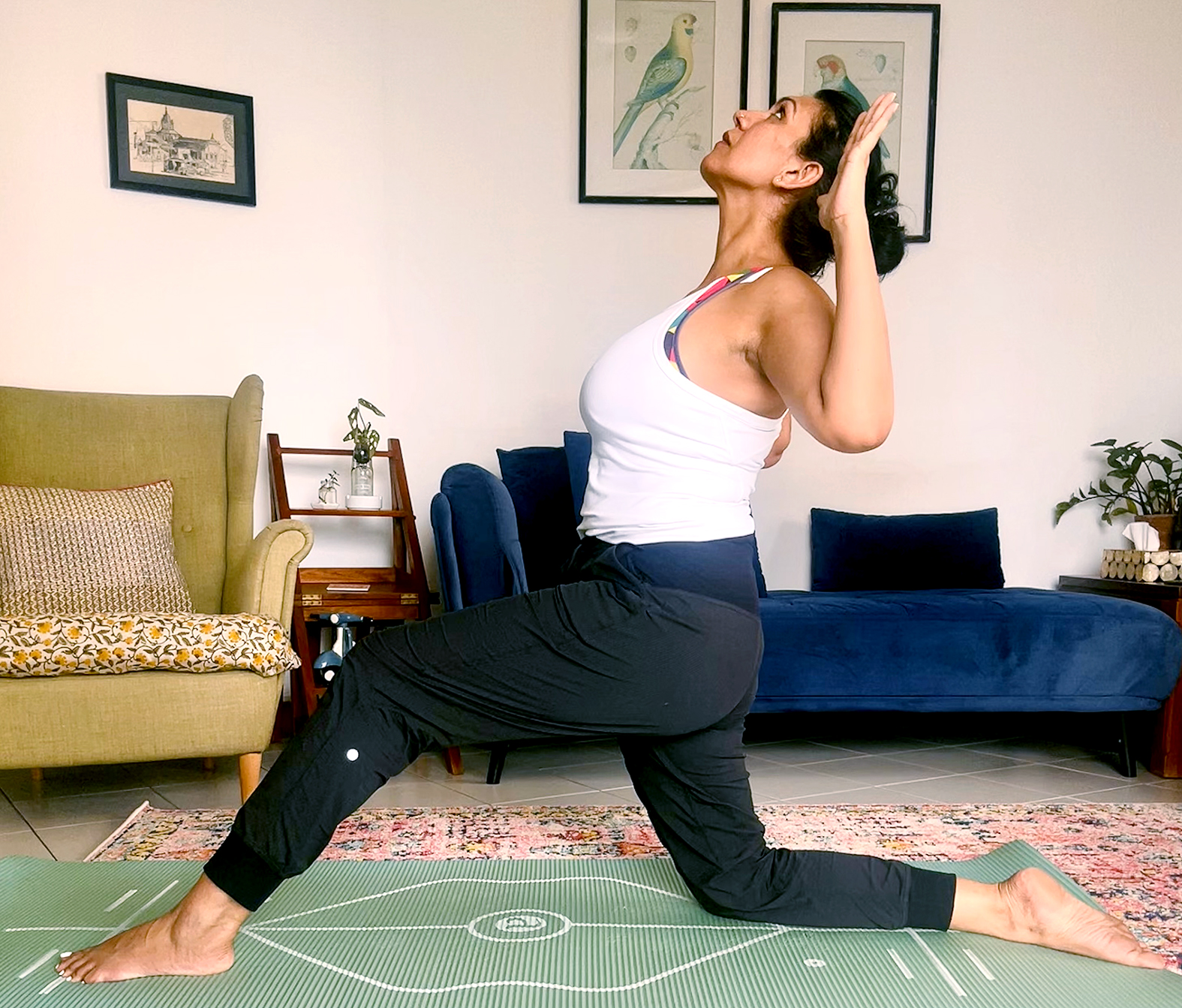
- Still in Downward dog inhale raise your right leg bringing it forward into Ashtachandrasana (crescent lunge), cactus arms, open your shoulders, slight back bend, breathing deeply opening up to happier possibilities. Repeat on the other side.
- Transition onto the mat, now in a supine state, bring knees to chest and exhaling twist into Supta Matsyendrasana. With every exhale relax your shoulders deeper onto the mat. As we wring water from a cloth a deep twist wrings unsettling emotions. Stay for up to five breath cycles or as long as is comfortable. Repeat on the other side.
- Back into a supine position, inhaling raise both your legs to 45 degrees continue slowly to 90 degrees, place your arms next to your buttocks and raise your trunk and buttock into Sarvangasana (shoulder stand), taking support of your arms and elbows. Inverting, sending blood to our head region stimulating the release of endorphins. Slowly come back into a flat back position. Exercise caution or do under guidance if Sarvangasana is not part of your practice.
- Lying flat on the mat, place your palms next to your head fingers pointing towards the shoulders, inhale and lift your head and back off the ground coming into Matsyasana, the crown of the head resting on the mat. Remove hands when balanced and hold position for as long as is comfortable. Use your hands to come to the neutral position.
- Relax in Savasana meditating here on channelising your energy towards calm and the strength that exists within you.
Quick tool: When anger or aggression takes over they say take a breath! Yogic breathing or Vibhagya svasana goes a step further using voluntary breath to control impulses.
Breath incidentally is how we can bridge the physical and that which exists within our mind.
Reflection: Consideration, mindfulness.
Cultivate Svadhyaya, study of oneself, reflecting on thoughts and energy. Noticing subtle sensations, possible when we are present, listening to our inner selves.
It’s not about not thinking
It’s about why that thought exists a deeper understanding of what prompts our emotions and the good and bad of it. I find at times it’s good to be alone. It is when we quietly reflect upon the inward eye that our deep-rooted problems reveal themselves, the tiny imperfections that we try to deny but know exist, destroying fake notions and ego.
It’s just you on your mat
And that’s how it should be cause here in this safe space we can look inward, accept and change. Meditation or dhyana though transforming perhaps requires a deeper practice. In my experience, a short Yin yoga sequence could be the answer for those of us with less time and smaller attention spans. A slow-paced style of yoga where a posture is held for longer, allowing time for reflection as the breath clears your mind and the postures stimulate the Nadis lending further clarity.
On your mat go slow
- Find yourself in Balasana (child’s pose) this once wide-legged, use a bolster or pillows to fold over onto if your heart so desires. With every breath sink deeper and deeper into your mat /pillow, stay.
- At your own pace transition to all fours inhaling raise your right arm threading it through from under your left resting your shoulder on the mat. No judgement if you can’t go all the way. Repeat on the other side.
- Return to all four hands and knees on the mat, come into Kapotasana (pigeon pose) bringing your right knee forward resting your shin and right buttock on the mat, left leg stretched behind. Chest lifted. Repeat on the other side.
- Come into Upavistha konasana (straddle pose), seated with legs wide open, bend over to touch your toes, and bow your head down on a block or pillow, connecting here reverentially with your universe.
- Follow with 10 rounds of OM chanting.
Consolidating our thoughts
It is not suppression and control but release and reflection that defines our path. Tat tvam asi – we are what we seek.